

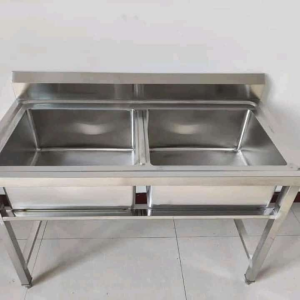
Double bowl sink stainless steel
Key Features
-
Two separate bowls for multitasking washing and rinsing
-
Stainless steel construction resists rust, stains, and corrosion
-
Deep basins accommodate large pots and baking sheets
-
Sound dampening pads reduce noise during use
-
Ideal for restaurants, hotels, commercial kitchens, and home kitchens
A double bowl sink stainless steel brings efficiency to any kitchen by providing two separate washing zones. Home cooks use one bowl for washing vegetables and the other for rinsing dishes. Commercial kitchens scrub pots in one basin while sanitizing utensils in the other. The dual bowl design eliminates the need to empty and refill a single basin when switching between tasks. This saves time, water, and effort. The stainless steel construction resists rust, stains, and the harsh cleaning chemicals used in both home and commercial environments.
The bowl configuration affects how you use the sink. Equal sized bowls, typically 350 by 400 millimeters each, offer balanced space for most tasks. This arrangement suits home kitchens where washing and rinsing share similar volume requirements. Unequal bowls feature a larger basin, often 450 by 400 millimeters, paired with a smaller 300 by 400 millimeter bowl. The larger side accommodates baking sheets, stockpots, and roasting pans. The smaller side handles handwashing, utensil soaking, or vegetable rinsing. Bowl depth ranges from 200 to 250 millimeters. Deeper bowls hold more water and reduce splashing but require bending further to reach the bottom.
Construction quality determines how well a double bowl sink performs over years of use. Commercial grade stainless steel, typically 18 or 16 gauge, resists denting and handles heavy pots without flexing. The brushed satin finish hides minor scratches and water spots. Rounded corners, often called radius corners, eliminate crevices where food particles can hide, making sanitation easier. Sound dampening pads or spray coatings applied to the exterior absorb vibrations, significantly reducing noise when running water or washing dishes. Undercoating prevents condensation from forming on the bottom, protecting the cabinet beneath from moisture damage.
Installation types include top mount, under mount, and farmhouse. Top mount sinks drop into a hole cut in the counter, with the rim resting on top. This style works with any counter material and is easiest to install. Under mount sinks attach beneath the counter, creating a seamless surface that wipes directly into the basin. This style requires waterproof counter materials like granite or quartz. Farmhouse sinks mount similarly to top mount but extend past the cabinet face, providing easier access to the deeper bowls.
Faucet compatibility is an important consideration. Double bowl sinks typically require a faucet with a swivel spout that reaches both bowls. Pull down or pull out spray heads make rinsing and cleaning easier. Pre drilled faucet holes come in configurations for single handle faucets (one hole) or double handle faucets (three holes). Some models include a side hole for a soap dispenser or sprayer. Offset drain placement puts the drain toward the back of each bowl, leaving more usable space in the bottom.
Maintaining your double bowl sink keeps it sanitary. Rinse after each use to remove food residue. Clean weekly with mild detergent and a soft sponge. Avoid steel wool and abrasive cleaners that scratch the surface. Remove hard water stains with a vinegar solution. Dry with a soft cloth to prevent water spots.
Bringing everything together, a double bowl sink stainless steel delivers multitasking efficiency for any kitchen. Two separate basins allow simultaneous washing and rinsing. Deep bowls accommodate large cookware. Durable construction resists dents and rust. Sound dampening reduces noise. Whether washing dishes at home or running a commercial kitchen, this double bowl sink will help you work faster and more organized every day.
Be the first to review “Double bowl sink stainless steel”
Related products
-
Hand wash scrub sinks
Original price was: KSh44,000.KSh40,000Current price is: KSh40,000. -
Hand washing area
Original price was: KSh9,000.KSh7,500Current price is: KSh7,500. -
Hand wash
Original price was: KSh25,000.KSh20,000Current price is: KSh20,000. -
Hand wash and damper
Original price was: KSh48,000.KSh45,000Current price is: KSh45,000. -
Double sinks
Original price was: KSh35,000.KSh33,000Current price is: KSh33,000. -
Stainless steel single sink
Original price was: KSh38,000.KSh35,000Current price is: KSh35,000.


Reviews
There are no reviews yet.